



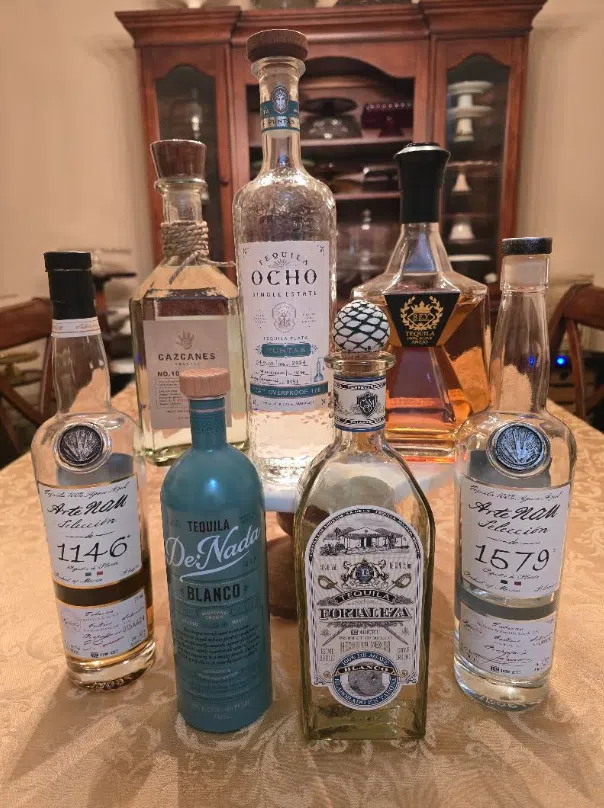
It was just one year ago that we decided to do something new … tequila!
“But,” you think while re-reading that line with your brow properly furrowed, “tequila is not new.”
And you would be correct. The first licensed tequila manufacturer was Jose Antonio Cuervo, who got a land grant to cultivate agave from the King of Spain in 1758; his son, Jose Maria Cuervo, opened the first “mescal wine” distillery in 1795. The first tequila legally imported to the US was from Don Cenobio Sauza Madrigal’s La Perseverancia distillery in 1873. The rules that govern what needs to happen for a liquor to be considered tequila were published in 1974. And I got my first serious hangover from drinking too much Tequila Sauza in 1986. Tequila has been around.
But what was old is new again, and tequila is no exception.
As the years went by, modernization came to Mexico’s old distilleries. Volcanic rock Tahona stones were replaced by steel roller wheels; brick ovens were replaced by industrial autoclave pressure steamers; the use of sweeteners, colorings, and flavorings became common; large corporations replaced the family-owned facilities and mass production made for a mostly unexceptional product. And most people’s experience with tequila in the 1980s and ‘90s was much like mine – covering the taste with salt and lime, getting nauseous, and dealing with the pain of the next day.
But a revolution was already underway. The traditional tequiladores began to lean into the craft of their business, into the art of tequila. Some who sold their name and history to international conglomerates (like Don Julio) started new family legacies with old recipes (like Lalo), some distilling descendants who had been shut out when their family sold the business (like Tequila Sauza) returned to their beginnings to start anew (like Fortaleza), and some who once concentrated on making products for others (as with the original Patron) returned to producing just for themselves (like Siete Leguas). These old/new distillers honored the agave, adding water and yeast and nothing else. They brought back the old ways, like tahona stones driven by mules to crush the agave and slow cooking in low temperature brick ovens to release the sugars. Today, they use hand-blown glass bottles, make full-proof Blancos, and do it all without using artificial additives of any kind.
This revolution has not gone unnoticed.
In 2024, tequila finally replaced vodka as the best-selling liquor in the United States for the first time. That checks out, because that was when Drinking Texas really started taking an interest in premium tequilas.
In 2025, the world’s most popular tequilas remain Cuervo, Don Julio, Patron, and Casamigos – the first two which have been owned for decades by international giants Beckmann and Diageo respectively and use additives; the third which actually uses artisanal distilling techniques but on a massive scale, and the fourth which is currently under investigation, being accused of using as little as 33% blue weber agave (which would disqualify it from being tequila at all). None of these made our list.
Instead, we chose traditional, artisanal, craft, unique offerings that do not require salt or lime or anything other than a glass to enjoy. We’re not being hipsters here; additive-free tequilas cut deep into the Big 4’s market share in 2025. If you’re the type of drinker who can’t stand the smell/taste/headache that comes with tequila, we’re here to tell you that you’ve been drinking the wrong ones. We’ve learned our lesson and now are going to steer you right.
To be eligible for this year’s list, the tequila had to be tasted on our show during 2025, it had to be artisanal or at least additive free; and it had to be more than just “good” – it had to be unique in some important way. We tasted tequilas each week throughout the year and then did a final taste-off of the top candidates in mid-December.
Here are the top 7 tequilas of 2025 as we see them. Our Lucky 7, if you will. Let the arguments begin …
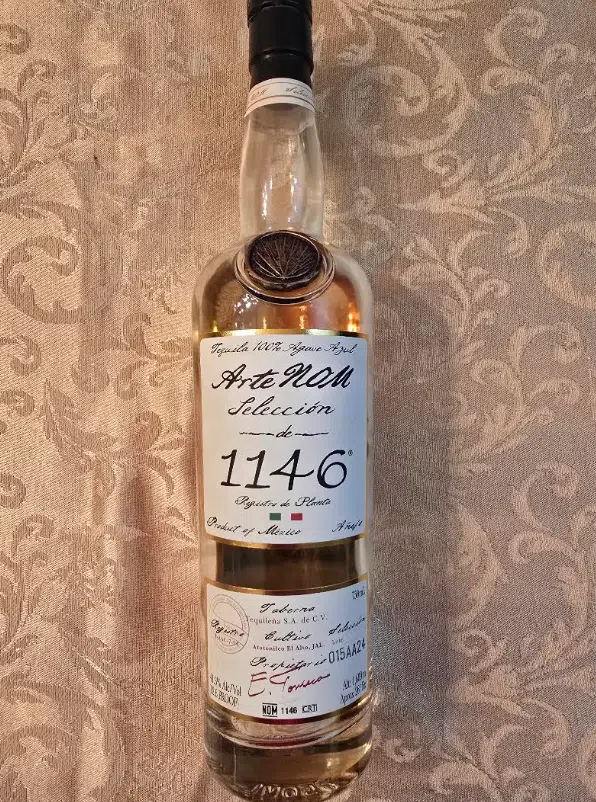
#7 – Arte NOM 1146 Seleccion Anejo, 82.6p. Made at Tequilenas SA de CV (NOM 1146) by master distiller Enrique Fonseca as part of the prestigious Arte NOM Artisanal Tequila series. It uses a blend of Highland and Lowland agave for a balanced sweetness, deep well water, low pressure autoclave slow cookers, a combination of roller and screw mill crushing to extract maximum sugars from the agave, and both column and copper Pot stills. Additive free. 60% of the tequila is aged 2 years and 40% is aged 3 years in French Oak Cabernet Franc wine barrels from the Loire Valley, then blended and aged 1 year in uncharred Canadian rye barrels.
The Arte NOM series is a project by Jake Lustig of Terranova Spirits, working with select tequiladores to produce one-of-a-kind spirits that showcase each distiller’s strengths. Fonseca is known for his premium line of Don Fulano tequilas (which includes the industry’s first 100-proof offering) and his luxury label Tears of Llorona. Arte NOM 1146 is the tequila he made to show off the capabilities of his distillery. It won a Double Gold at the 2025 Agavos Awards.
This bottle has earned a reputation as a whiskey drinker’s tequila, with an abundance of whiskey notes on the nose and palate but without losing its agave sweet center. There are notes of butterscotch, vanilla, and cinnamon with hints of dried cherry, orange zest, and tropical fruit found on the nose; the palate leads with cooked agave and toasted oak, then wanders into rich, sweet notes like dark chocolate, toffee, and sugared pecan. Best for sipping neat or pairing with a cigar.
#6 – Arte NOM 1579 Seleccion Blanco, 81,4p. Made at Disteleria El Pandillo (NOM 1579) by the “Mad Scientist,” Felipe Camarena, this bottle is also a part of the Arte NOM series. It uses Single Estate Highland agave rather than a blend of sourced plants for a unique yet predictable flavor, a combination of deep well and local rainwater, specially designed stone/brick ovens, a unique mechanical Tahona stone, and copper Pot stills. Additive free. Blancos are not aged but go right from the still to the bottle.
Camarena, whose family has been making tequila for 5 generations, once ran the family distillery alongside his brother, Carlos. They made award-winning tequilas like El Tesoro, Siembra Alteño, and the original Tapatío (the original family distillery, now headed by sister Jenny Camarena, still does). But in 2005 Felipe, a trained civil engineer, left to open his own distillery. This is where he obtained the nickname – instead of opening either a traditional or modern distillery, he custom built highly efficient versions of traditional equipment designed to make tequila production more sustainable and precise. Among his inventions are “Felipestein,” a 19,000-pound mechanical tahona wheel salvaged from an old steamroller, “Igor,” an agave shredder using parts from railroad cars and semi-trucks, a modified oven that cooks more evenly than regular stone/brick ovens, and a one-of-a-kind water “alchemy” that uses blends from different sources for different flavor profiles.
El Pandillo makes G4 (our 2024 Tequila of the Year) and Volans. Arte NOM 1579 represents a chance for Camarena to make something else unique. With G4, he uses a combination of volcanic spring and rain water for a traditional Highland taste of citrus and pepper; with 1579 the blend of deep well and rain water reveals a distinctly earthy, vegetal, mineral-heavy taste unusual for the region. It’s considered one of the most balanced and “pure” expressions of agave available. It won Gold at the 2025 Agavos Awards.
The nose is surprising but familiar: petrichor (the smell of rain), wet cement, and earthy minerals, along with hints of spearmint, rosemary, and fresh cut grass. The mouthfeel is noticeably velvety. And the flavors are complex for a Blanco: caramelized sweet agave, orange cream, white pepper, anise, green olive, and spearmint. It’s an experience, especially for the veteran tequila drinker.
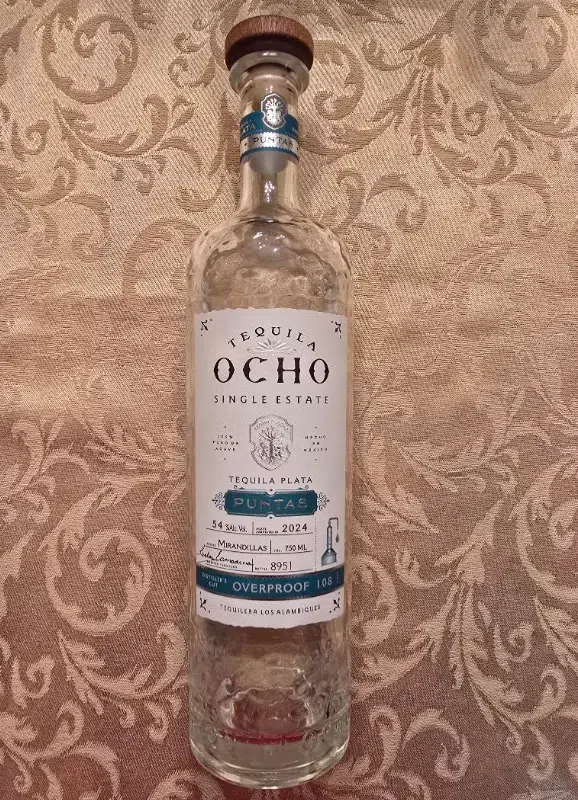
#5 – Tequila Ocho Plata Puntas, 108p. Made at Los Alambques (NOM 1474) by third-generation master distiller Carlos Camarena (the brother of Felipe Camarena). He created Ocho in 2008 with the late Tomas Estes (1945-2021), a world-renowned ambassador for tequila and Mexican culture, and now runs this distillery full time. It uses Single Estate Highland agave, deep well water, traditional stone/brick ovens, a roller mill, and copper Pot still. Additive free. Platas are Blancos, so they are not technically aged though they are often rested in stainless steel vats for up to two months; Puntas are a full proof distiller’s cut.
Estes was instrumental in changing the perception of tequila from a cheap party shot into a respected, artisanal spirit. It was his idea to use “terroir” in tequila making, something common in the production of fine wine, where the use of specific soil and weather conditions influence the final flavor. It was his idea to make Single Rancho batches, making Ocho the first tequila to produce Single Estate tequilas. Each year Ocho features a different single estate, which means there will be slight variations by vintage. This bottle is from Mirandillas, harvested in 2024. It won the Chairman’s Trophy at the Ultimate Spirits Challenge with a score of 96, the highest score given to any tequila in any category.
The high proof is popular with experienced sippers because it has more intense flavors than a tequila that has been proofed down with water to 80. It also offers the option to add water yourself until it tastes just right for each drinker. The nose is cooked agave with notes of citrus, wet earth, and minerals. The agave arrives first on the palette, but there is also black pepper, cinnamon, mint, and a touch of creamy butter. There’s an enjoyable sweet burn at the finish that reminds you of the high proof.
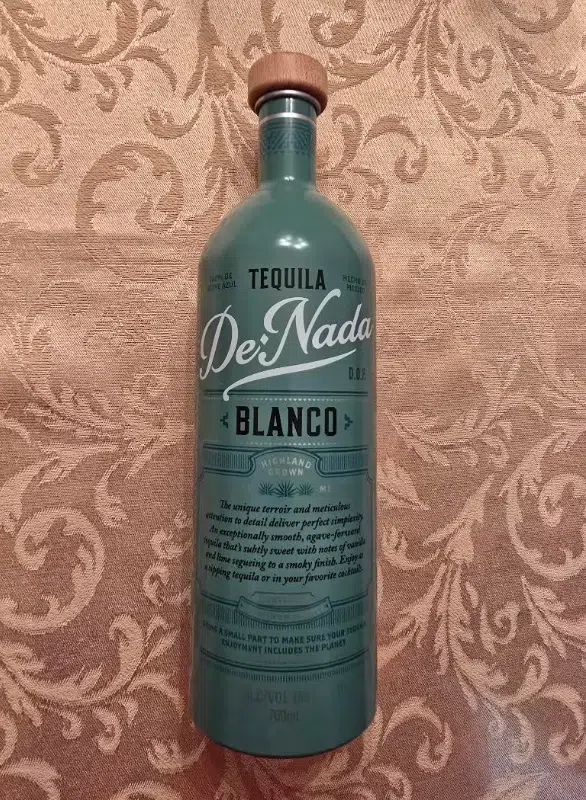
#4 – Tequila De Nada Blanco, 80p. Made at Feliciano Vivanco y Asociado (NOM 1414) by master distiller/blender Sergio Cruz and owner and original master distiller Sergio Vivanco. The Two Serios use Single Estate Highland agave, deep well water, stone/brick ovens, a roller mill, and copper Pot stills. Additive free. De Nada is notable for its commitment to the environment, including introducing the industry’s first permanent aluminum bottle for tequila, which is 100% recyclable, unbreakable, and significantly lighter than glass to reduce shipping emissions. The brand is also certified carbon neutral
Cruz is known industry-wide as the “Chef de Cuisine” of tequila, an agave architect who has worked several top-tier brands like Gran Dovejo, Arte NOM 1414, Yeyo, and Juan Lobo. He’s famous for his experimental techniques, including serenading the fermenting agave with classical music to influence yeast activity. It won Double Gold at the 2025 Agavos Awards.
This bottle flew completely under our radar until one day we saw the green aluminum bottle that looked out of place on the crowded tequila store shelf and picked it up. It was so light compared to the other bottles of tequila, the store clerk insisted it must be opened (it wasn’t) and went in search of a “full bottle.” Unable to find one heavier, we took this one home. Roasted agave is the dominant aroma with hints of vanilla, lime, grapefruit, and pineapple. The flavor is a mix of sweet (agave), fruity (peach, grapefruit), and spicy (black pepper, peppermint). Clean, rich, and refreshing.
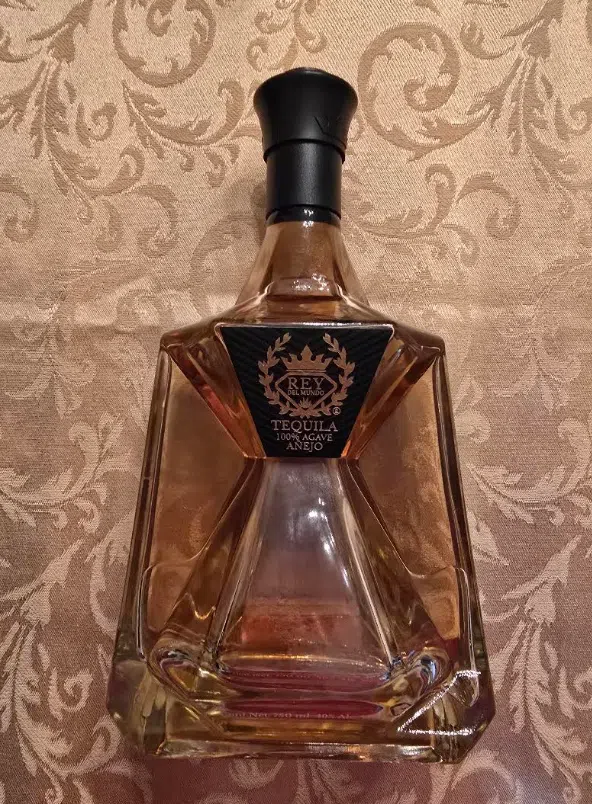
#3 Rey del Mundo Anejo, 80p. Made at Tequilera la Herencia, also known as Casa Maestri (NOM 1590), a female-owned distillery, and overseen by master distiller Ana Maria Romero Mena. It uses Highland agave, deep well water, stone/brick ovens, a roller mill, and stainless-steel Pot stills. Additive free. The anejo is aged 18 months in both American white oak bourbon barrels and French oak cognac casks, then the two are blended and bottled. The bottle itself is a work of art, designed to present as regal with an hourglass figure at its center as a nod to the female-run facility. The distillery produces more than 120 different brands, but Rey del Mundo is owned by the Cantu Group, led by Marcus Cantu of Round Rock, TX.
Romero Mena is one of the most influential and respected figures in the tequila industry, often referred to as having the “most famous nose” in the business. In 2007, she published The Aromas of Tequila: The Art of Tasting, where she identified over 600 unique scents found in tequila. She mapped these onto an aroma wheel that has since become an industry standard for training the senses. She was one of the first Official Catadores (tasters) of Tequila globally and has served as an advisor for the Tequila Regulatory Council (CRT).
Rey del Mundo is a luxury sipping tequila with a rich, dessert-like flavor that pairs well with cigars. The barrel influence is evident in both the nose and palette. It has a strong aroma of butterscotch, banana, plum/prune, and cooked agave. The flavor is rich, almost chewy, with sweet agave, vanilla caramel, butterscotch, dark chocolate, prunes, cinnamon, nutmeg, black pepper, and spicy oak. It’s the most expensive bottle on our list, but it is also the one that whiskey drinkers should find most appealing.
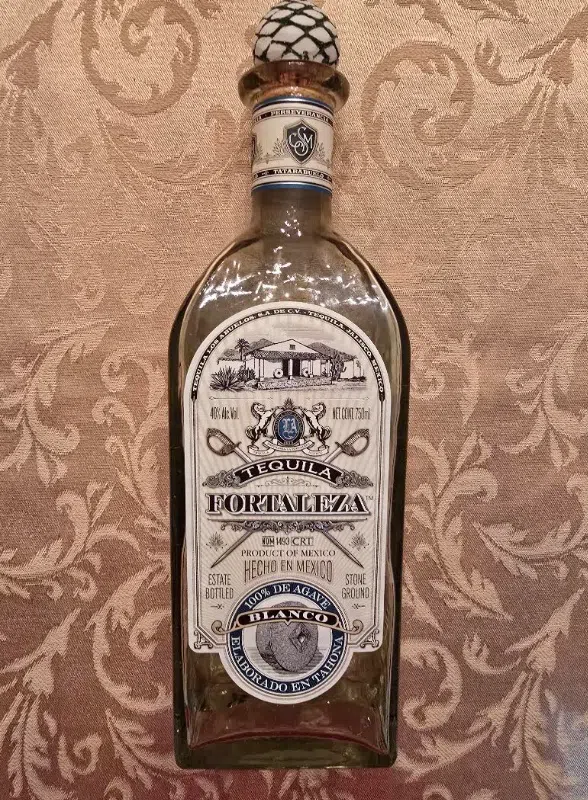
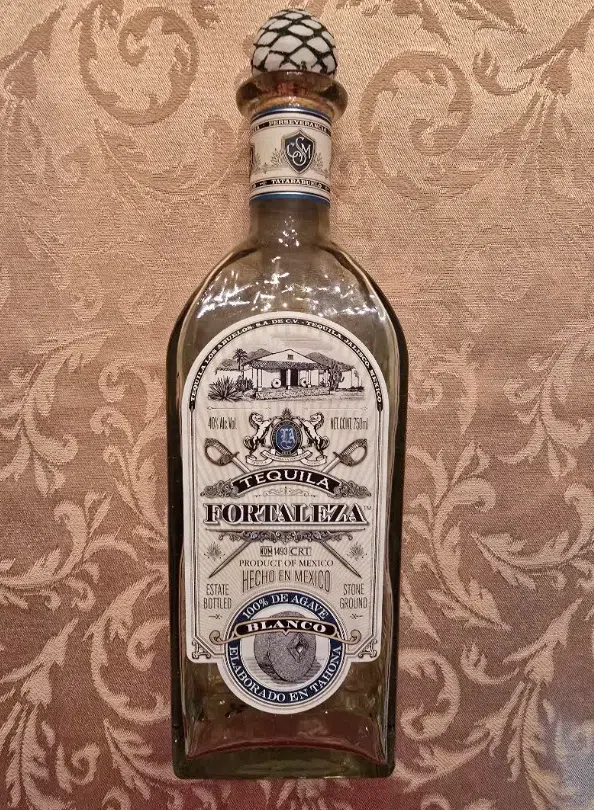
#2 – Fortaleza Blanco, 80p. Crafted at Tequila de Abuelos (NOM 1493) by Guillermo Erickson Sauza, the man who revived his family’s 150-year-old distillery in 2005 with the launch of Fortaleza. It uses Lowland agave, deep well water, stone/brick ovens, a tahona stone, and copper pot stills. Additive free. Each bottle is hand blown with its unique roughhewn stone look and the signature pina stopper. The tequila is bottled by hand, one of many processes used today that are the same as they were 150 years ago.
There are no acknowledged “unicorns” in tequila; unlike whiskey, they don’t really do limited releases and allotments. Fortaleza is as close as any tequila comes to being one. It’s always been artisanal and additive-free, but recently it’s become “the” go-to tequila for novices and connoisseurs alike. This formerly $30 bottle can easily go for $100 in the store – if you can find it. It seems only right, since Fortaleza (or at least its forebearer) was the first tequila legally imported to America, specifically El Paso, TX, in 1873. Don Cenobio Sauza Madrigal opened La Perseverancia that year and began selling “mezcal wine.” His son Eladio Sauza took over and changed the name of the product to “tequila,” naming it after the town it was made in. He eventually named the product Tequila Sauza and at about the time of the Mexican Revolution was outselling his competition Cuervo and Herradura. The family ran the distillery, updating and modernizing, until 1990, when it was sold to Suntory. Guillermo, who still owned the family property and the original distillery building from 1873, went to work rebuilding and started making tequila in 2005 just like his great-great-great-grandfather did.
Aromas include cooked agave and citrus with light notes of butter, black pepper, and an earthy, vegetal quality on the nose; the flavor of baked agave greets the tongue, but soon notes of lime, basil, orange, green olive, and herbs land on the palate. Less sweet, more herbaceous than the Highland tequilas.
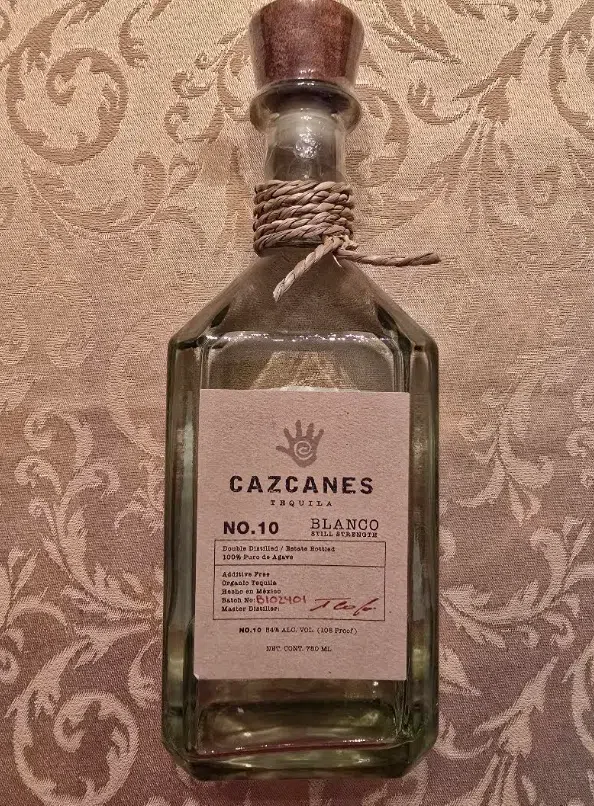
#1 – Cazcanes Blanco No. 10 Still Strength, 108p. Made at Taquilera Tap (NOM 1614) by master distiller Francisco Jimenez Lazcarro (Don Chico) based on a recipe by co-founder Colin Edwards, a Napa Valley winemaker who travelled to Mexico to study agave just over a decade ago. It uses Lowland agave, Navivhi spring water, low pressure autoclave slow cookers, a roller mill, and stainless-steel column and Pot stills. Additive free.
Cazcanes makes three Blancos, #7, #9, and #10, with the numbers pertaining to the alcohol content: #7 is the standard 80 proof, #9 is the high proof 100 proof, and #10 is the still strength 108 proof. It won Gold at the 2025 Agavos Awards.
The brand’s story tells that while Colin was researching tequilas, he was led by a local taco vendor (a man you would absolutely trust) to a master distiller named Humberto Alvarado who was producing a raw 110-proof agave spirit in a remote jungle Palenque using a 300-year-old family recipe. Colin apprenticed under Humberto for more than a year, learning his process and developing a tequila based on that family recipe.
Founded in 2015, Cazcanes is named in homage to the Cazcanes people, the last indigenous tribe in Mexico to be conquered by the Spaniards. The logo features the “Ancient Healing Hand,” a symbol representing the resilience and wisdom of the Cazcanes natives.
The use of Lowland agave gives the tequila an earthy, vegetal, herbaceous flavor while the use of this specific volcanic spring water for extraction, fermentation, and proofing provides a distinct mineral profile central to Cazcanes’ identity. The nose features strong notes of cooked agave, citrus, and black pepper. Flavors are intense and complex, with a balance of vegetal agave, minerality, black pepper, olive brine, and tropical fruit.
That’s it! That’s the list.
We believe the selections we’ve made are dead solid perfect. You won’t go wrong trying any one of them. But if you also can’t believe we left your favorite whiskey off the list, go ahead and let us know about it. You can always try and prove it to us with a little impromptu tasting…
Meanwhile, we’re already getting started on next year’s list. We promise to do better.










Comments